Gulf Coast Alabama, 1955
Rural ground, not a postcard.
The novel sits in rural Alabama on the Gulf — sandy ground, longleaf pine, live oak and moss, a county of farm roads rather than a city. Heat. Pecan shade. A church at the end of a sand road. Screened porches where a county does its real talking.
It was not outside the year. In August, Emmett Till was murdered in Mississippi. On the first of December, Rosa Parks was arrested in Montgomery, and the bus boycott began. Jim Crow ordered the schools, the bus, the waiting room, the church, and the courthouse steps. The pines did not make a separate country.
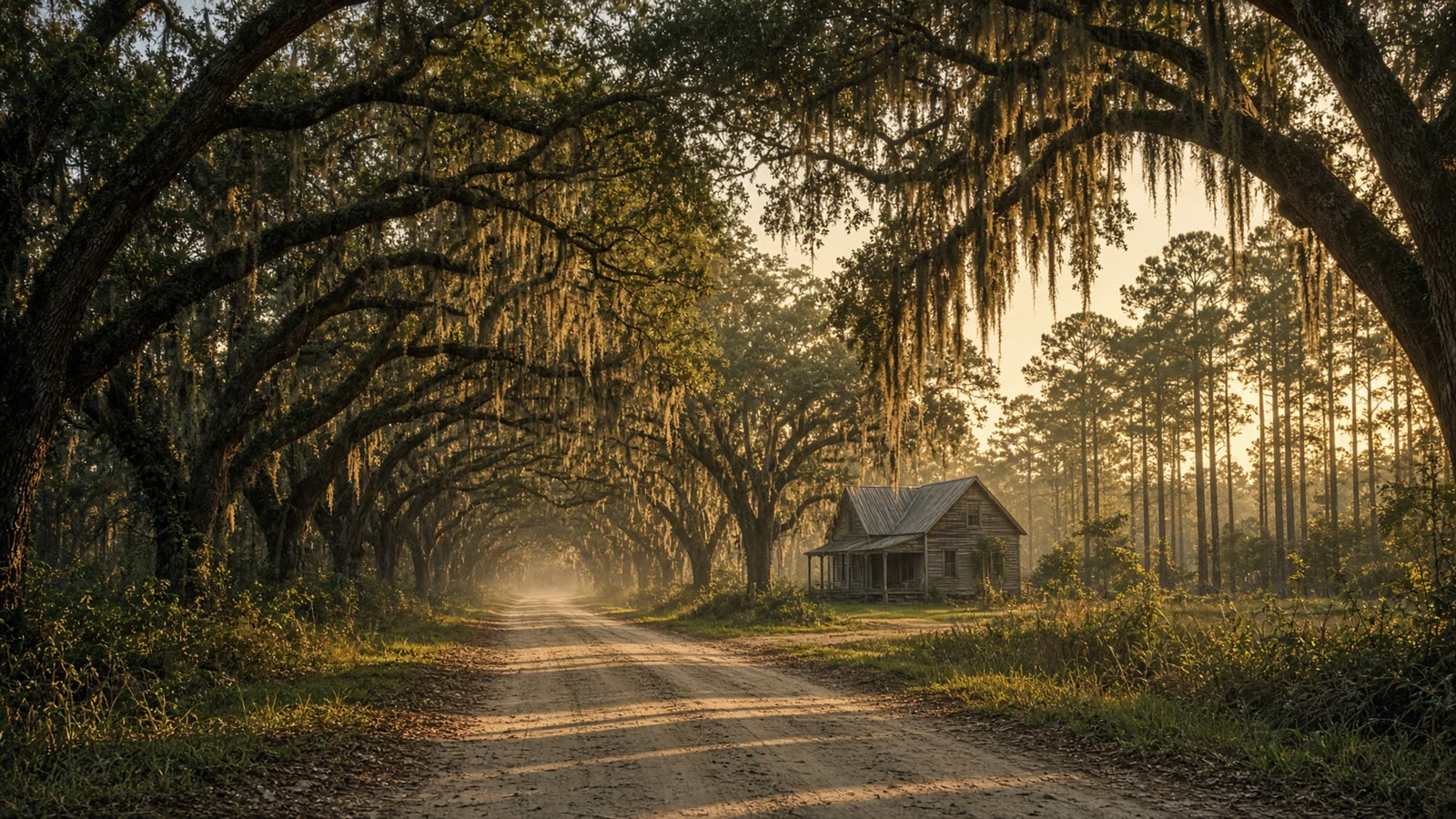
The sand road
Sand goes pale under the live oaks. They throw a tunnel over the road, and a house can sit a long time before anyone decides to visit it.
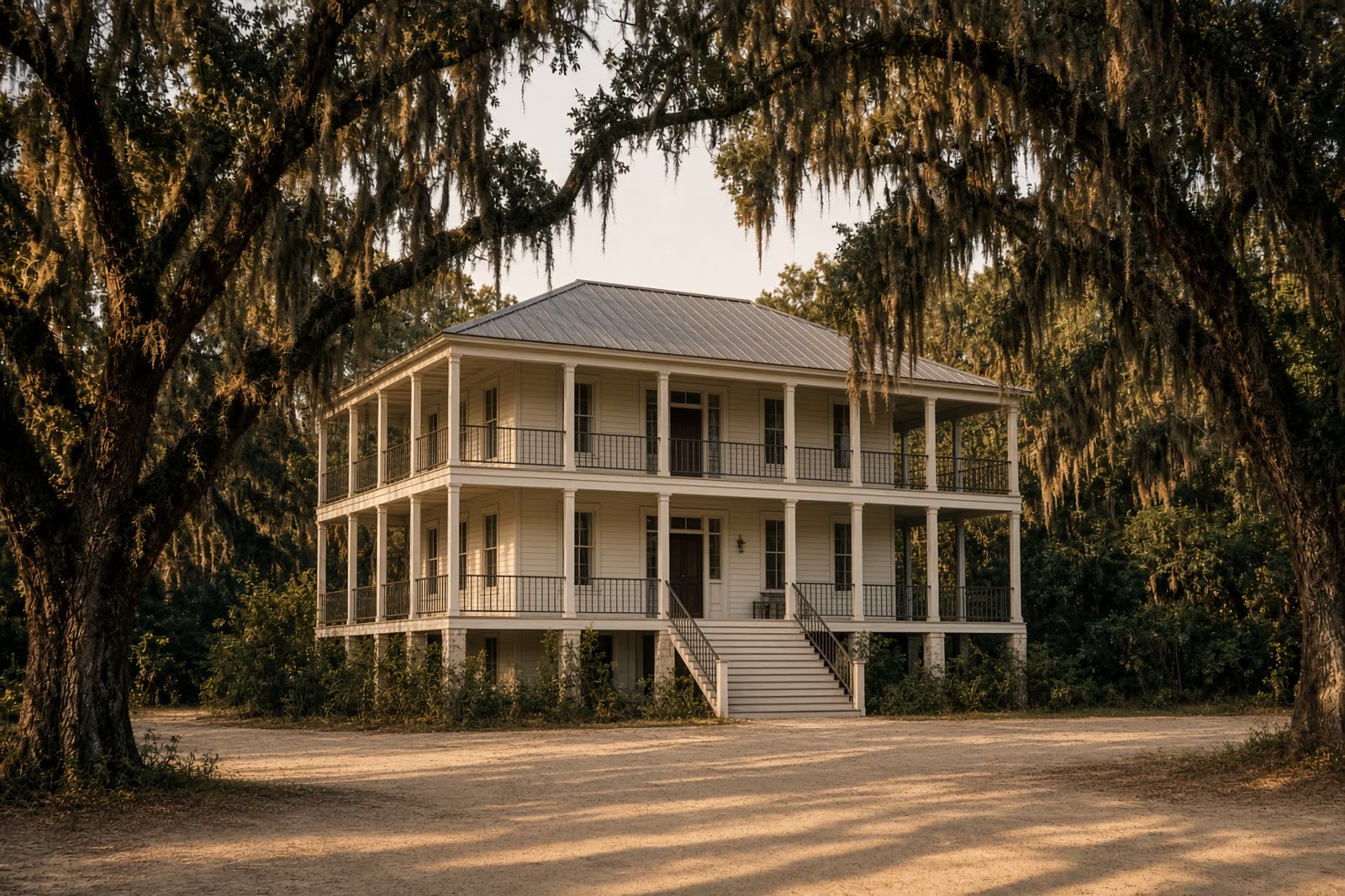
The house
Newly done. Metal railings along both galleries, set back from the road under the live oaks.
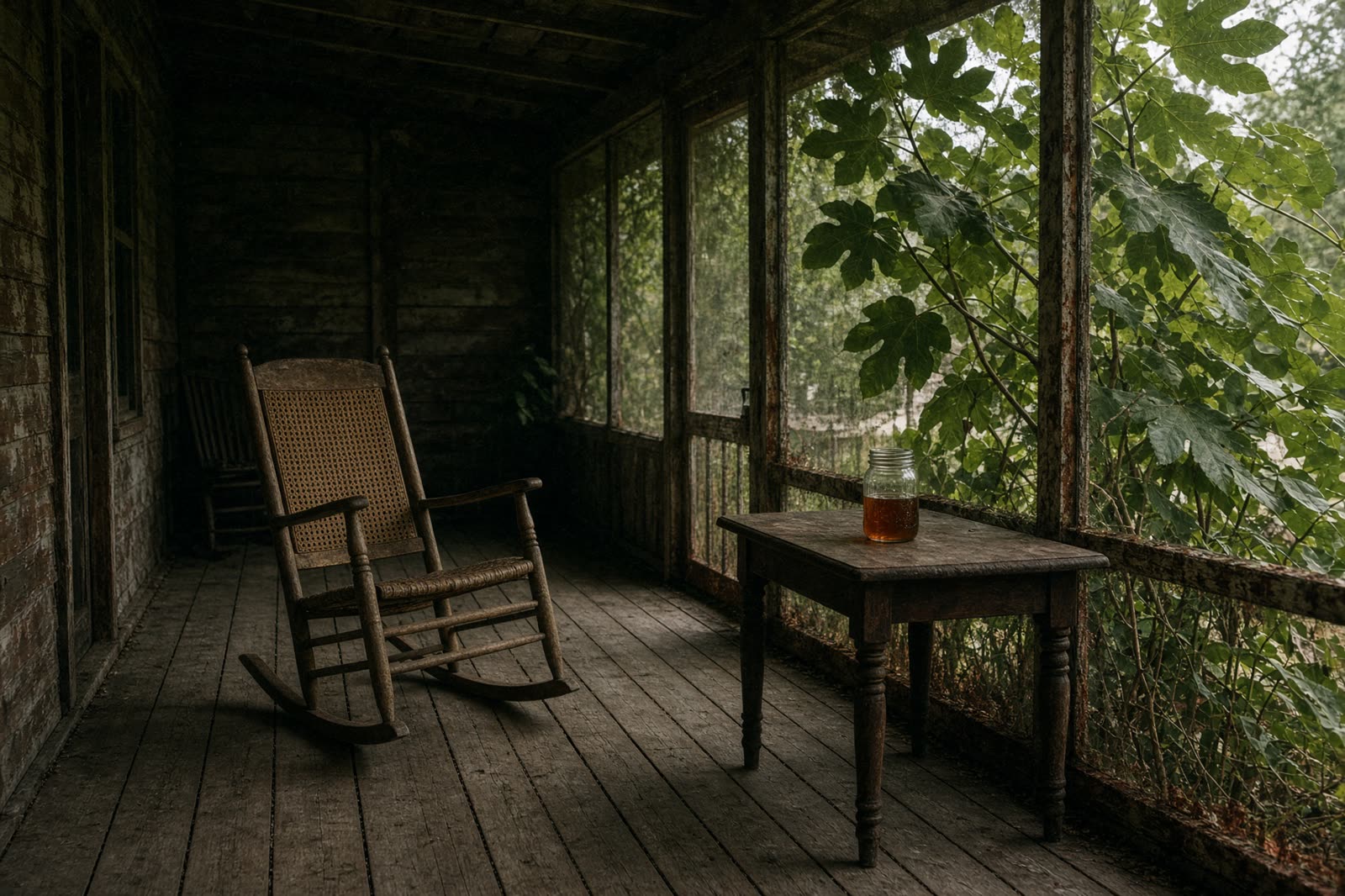
The porch
Screens against the mosquitoes, a chair, sweet tea. A county does a good deal of its real talking where it can see who is coming up the steps.
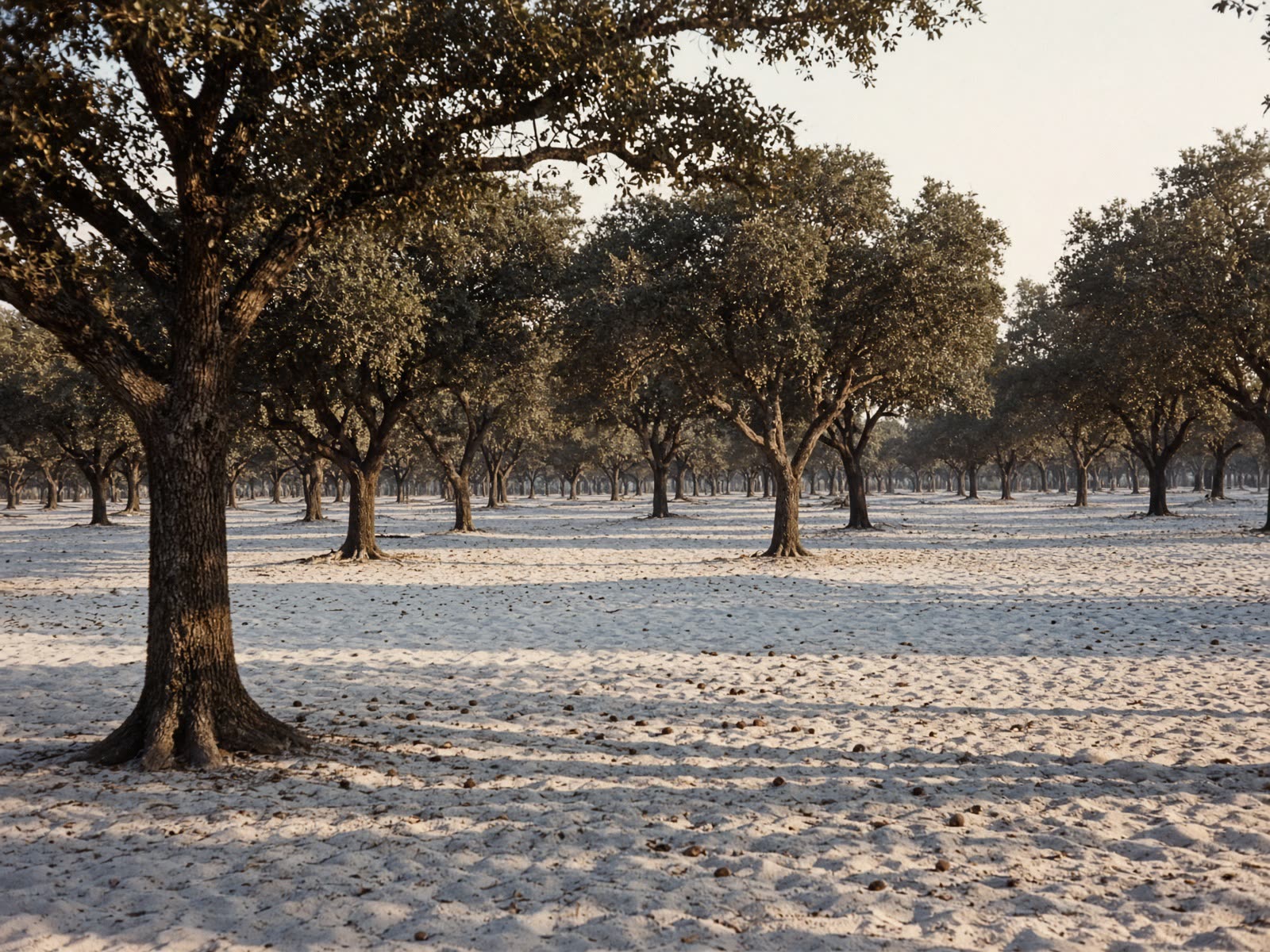
Pecans
A pecan grove is a bet on people you may not live to meet. White sand, wide trees, a crop that teaches patience.
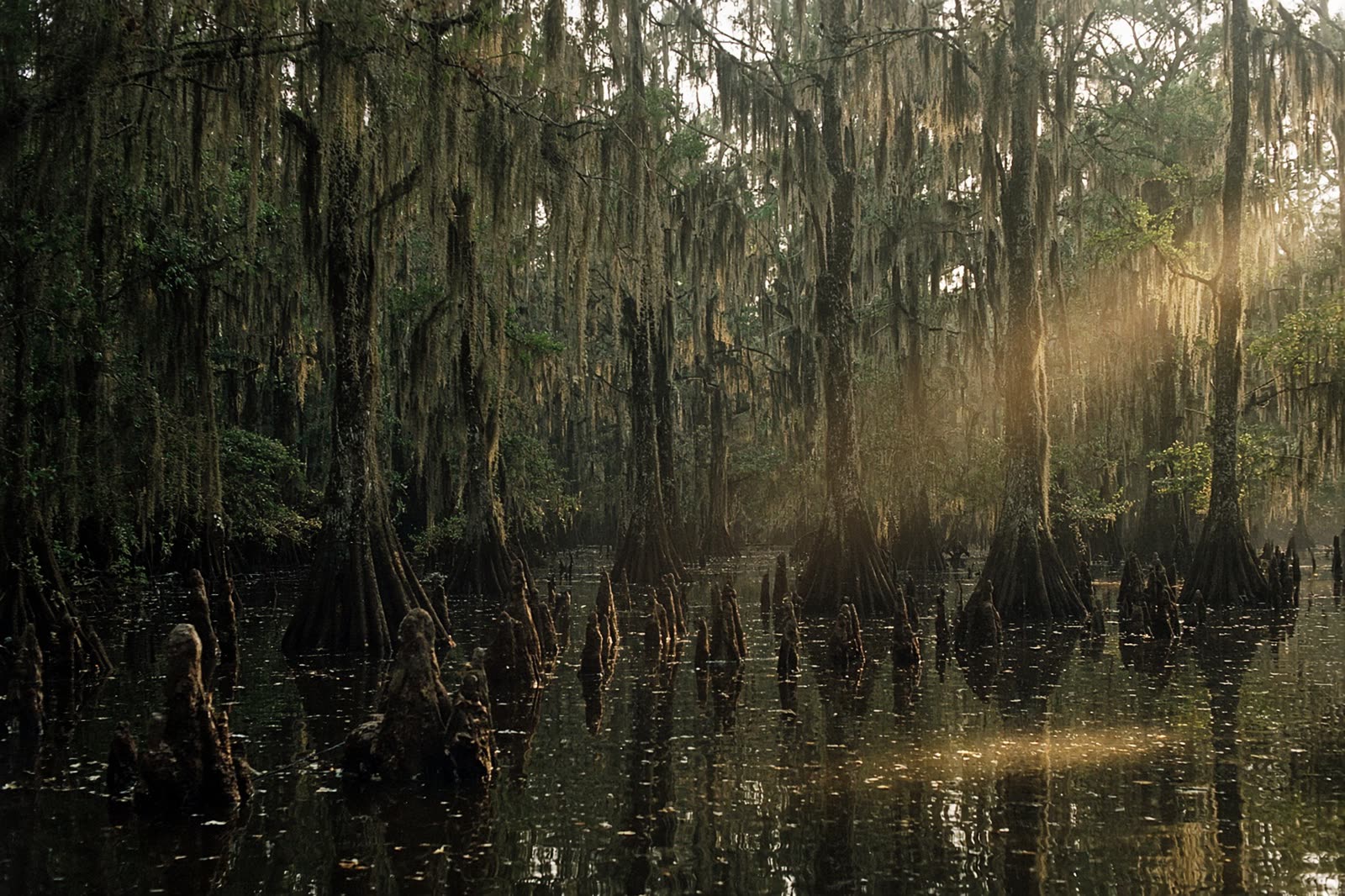
The slough
Cypress knees, moss, and a light that does not last. The water here is black, and close.
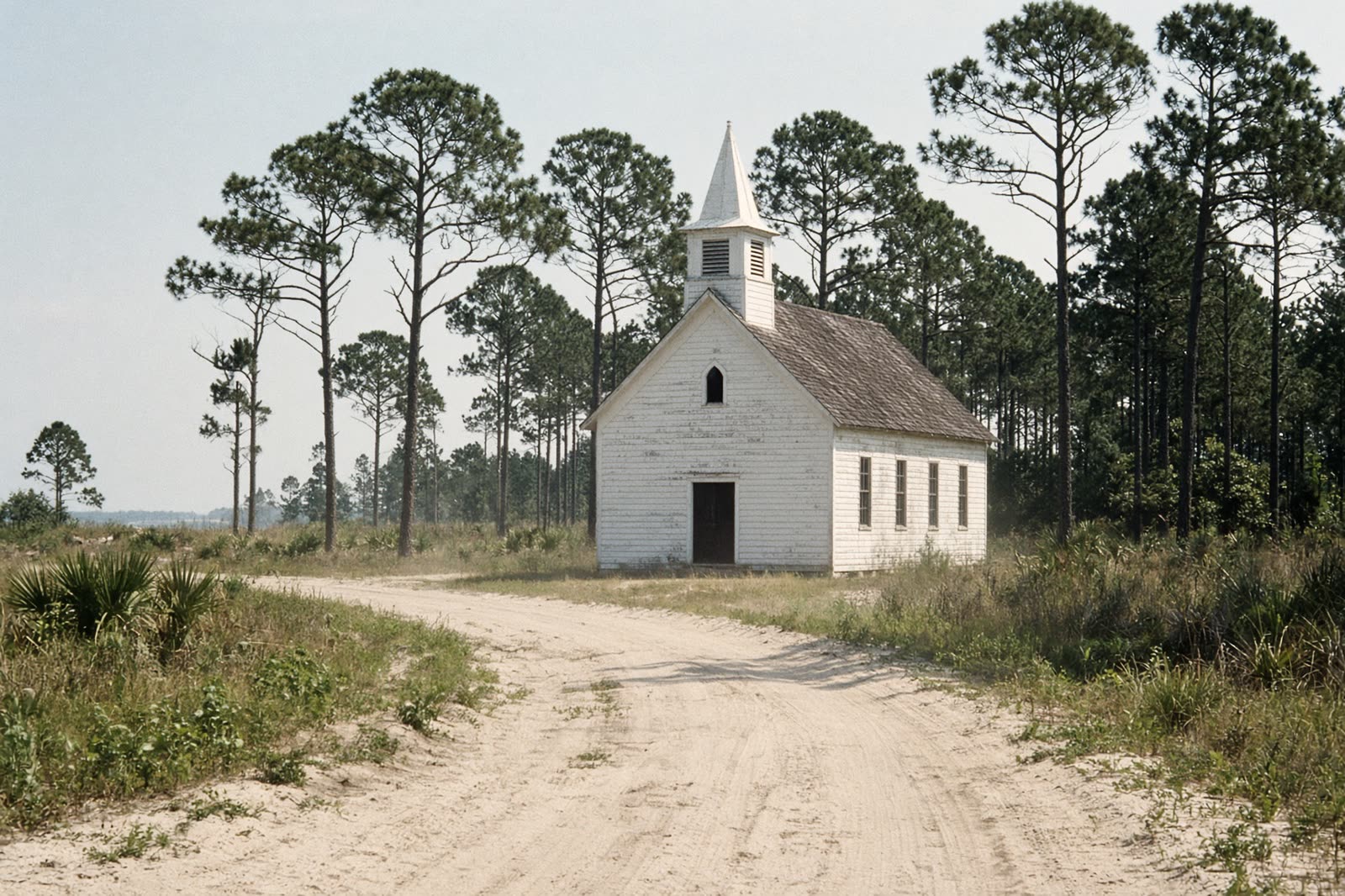
Sunday
A white wooden church at the end of a sand road. In 1955 the congregations of this county were kept apart by custom and by law.
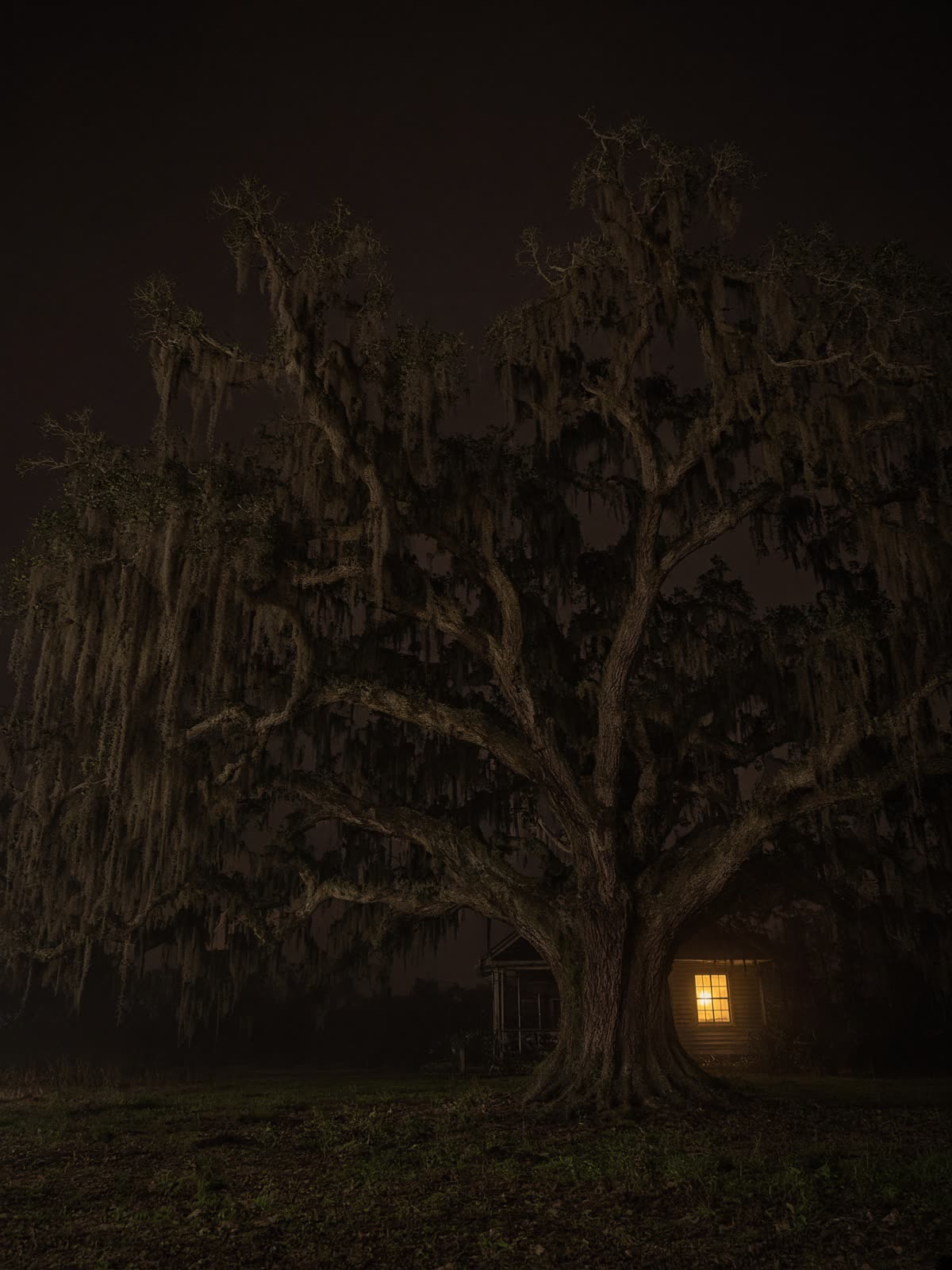
Midnight
The title’s hour. One window, an old tree, and whatever a road is willing to do when the courthouse is dark.